Mitigating the risks of abuse of power
© WFP/Abubakar Garelnabei
Strengthen programmes to mitigate the risks of abuse of power.
This section provides guidance and tools for humanitarian/development teams to explain what abuse of power is and how to prevent abuse of power by private sector actors.
It focuses on strengthening customer protection, promoting positive behavior, and ensuring fair and respectful interactions with cash recipients.
Tools and Resources
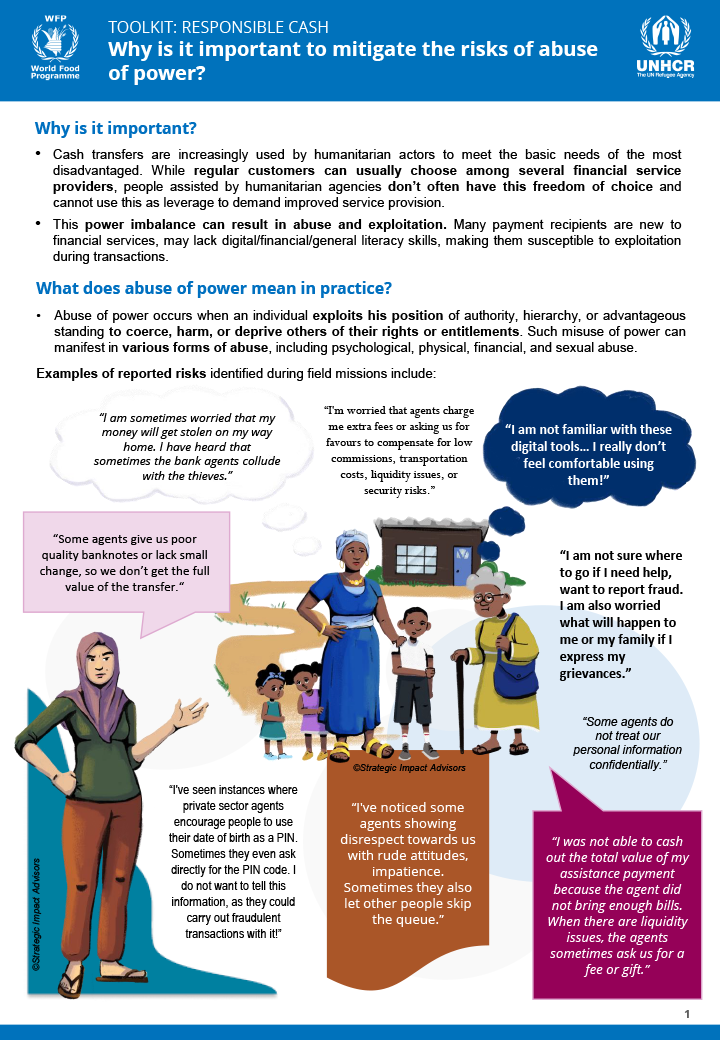
Why is it important to mitigate the risks of abuse of power?
Promote ethical, accountable interactions that prevent abuse of power in cash assistance. Cash transfers can create power imbalances, especially when people assisted by humanitarian agencies don’t have the same freedom of choice as regular customers. This tool explains why this imbalance can lead to abuse and exploitation. It helps staff and partners understand what “abuse […]
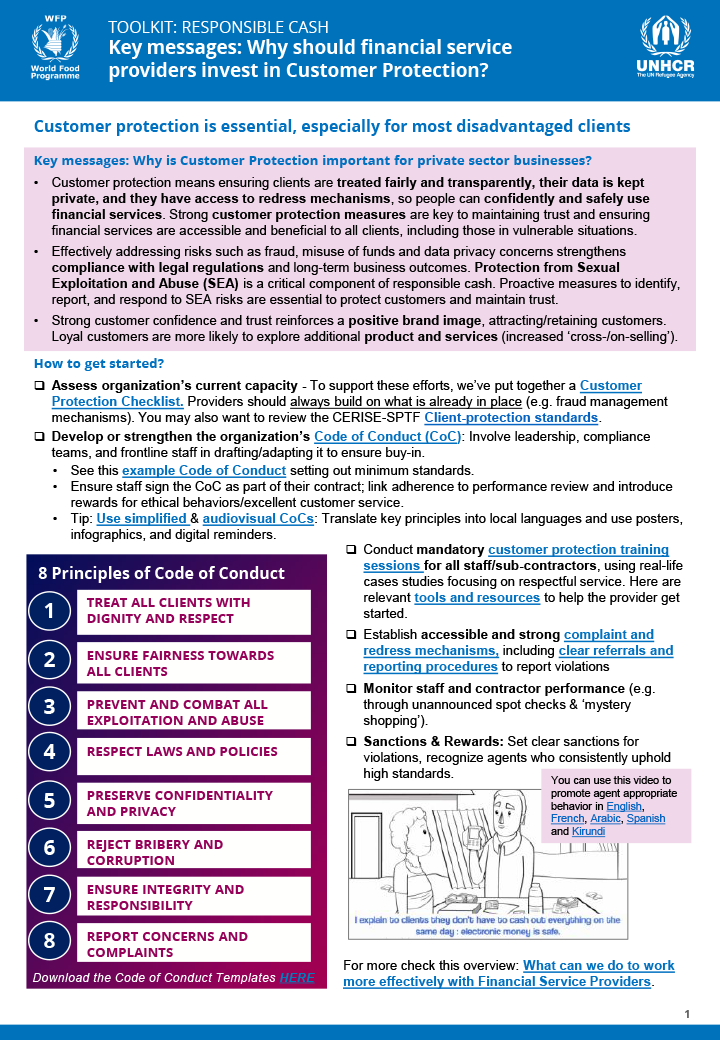
Key messages: Why should financial service providers invest in Customer Protection?
Tips on how to engage and support financial service providers in strengthening customer protection for fair, safe and confidential financial services people can trust. Customer protection is essential for helping cash recipients use financial services confidently, safely, and with trust. This tool contains key messages that you can use when engaging with financial service providers […]
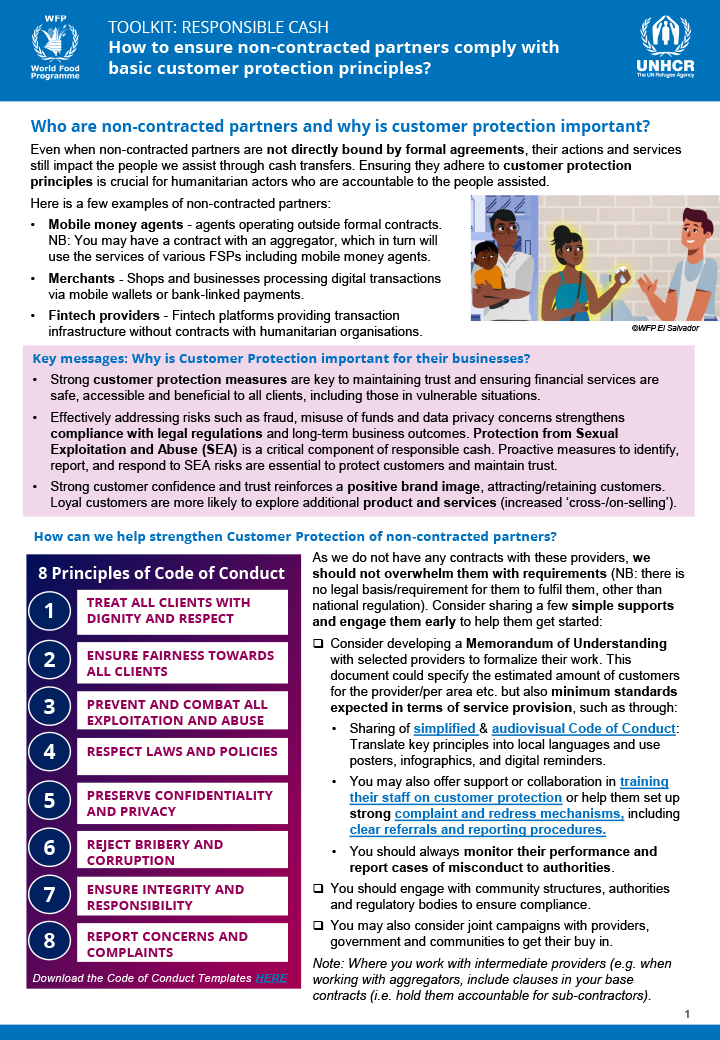
How to ensure non-contracted partners comply with basic customer protection principles?
Extend customer protection standards to non-contracted partners to ensure safe and consistent service provision. Non-contracted partners still interact with the people humanitarian/development organizations assist, even though they are not formally bound by agreements. This tool explains why applying basic customer protection principles with these partners is essential for safe, fair, and reliable cash assistance. It […]
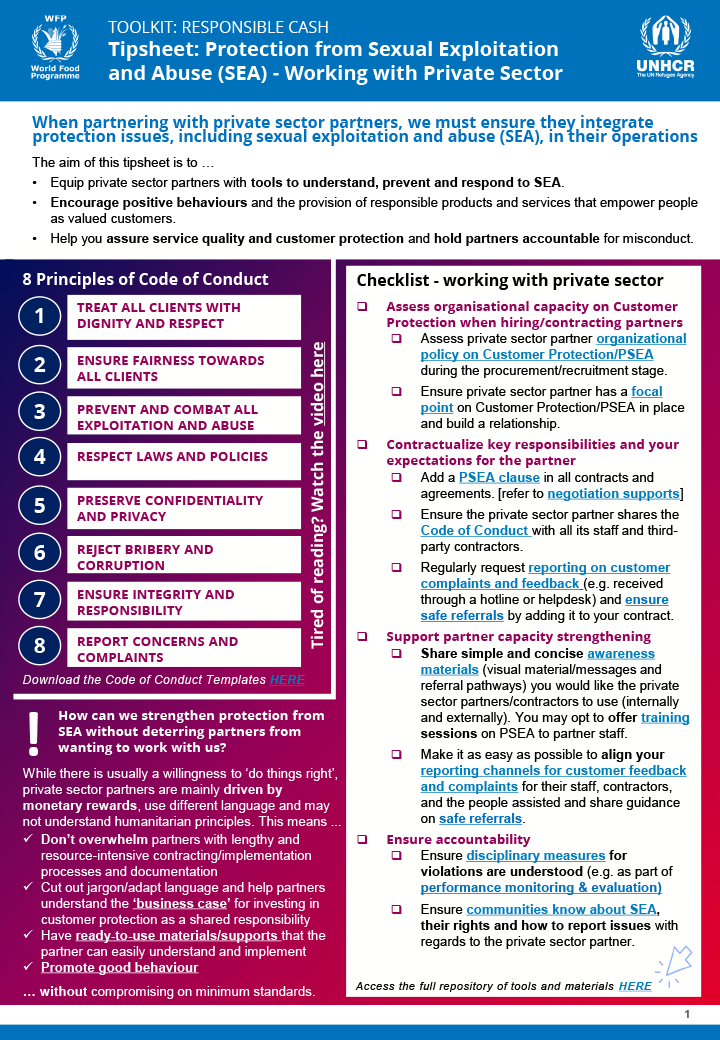
Tipsheet: Protection from Sexual Exploitation and Abuse (SEA) – Working with Private Sector
Embed Protection from Sexual Exploitation and Abuse into every private-sector partnership. Working with private sector partners means ensuring they integrate protection issues, including Protection from Sexual Exploitation and Abuse (PSEA), into their operations. This tool helps you engage with partners on PSEA as part of broader customer protection. It offers practical ways to help partners […]
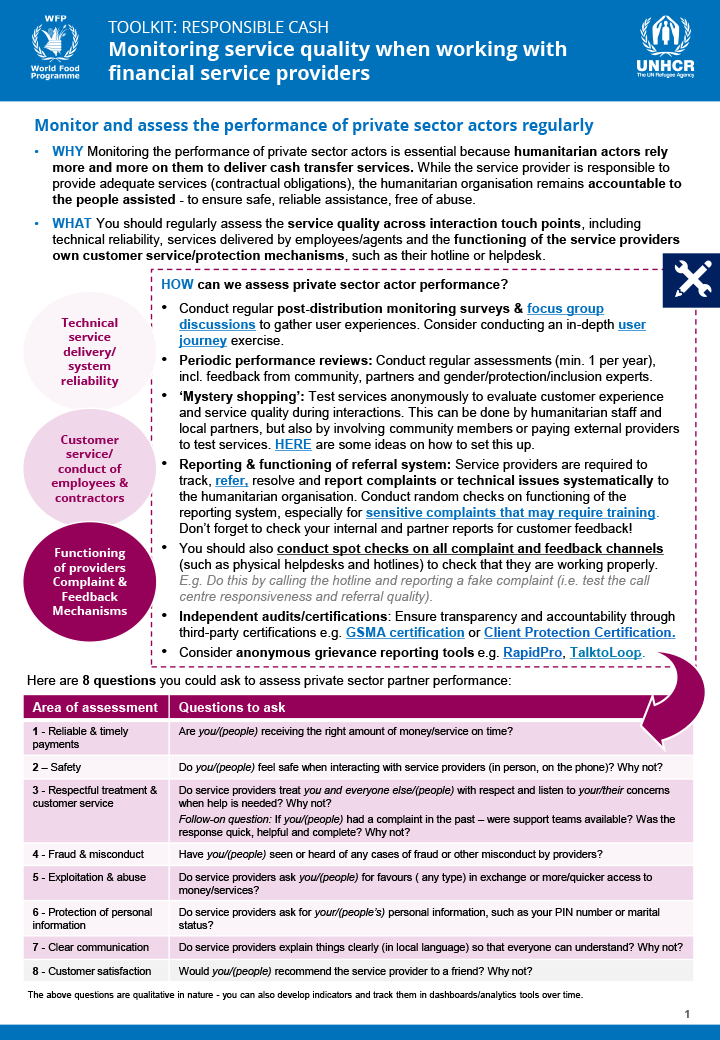
Monitoring service quality when working with financial service providers
Ensure safe, reliable, and accountable service delivery through continuous monitoring. Monitoring private sector performance is essential because humanitarian/development actors remain accountable to the people assisted. This tool explains why regular oversight matters and what to look for across key interaction points to ensure services remain safe, reliable, and free of any form of misconduct by […]
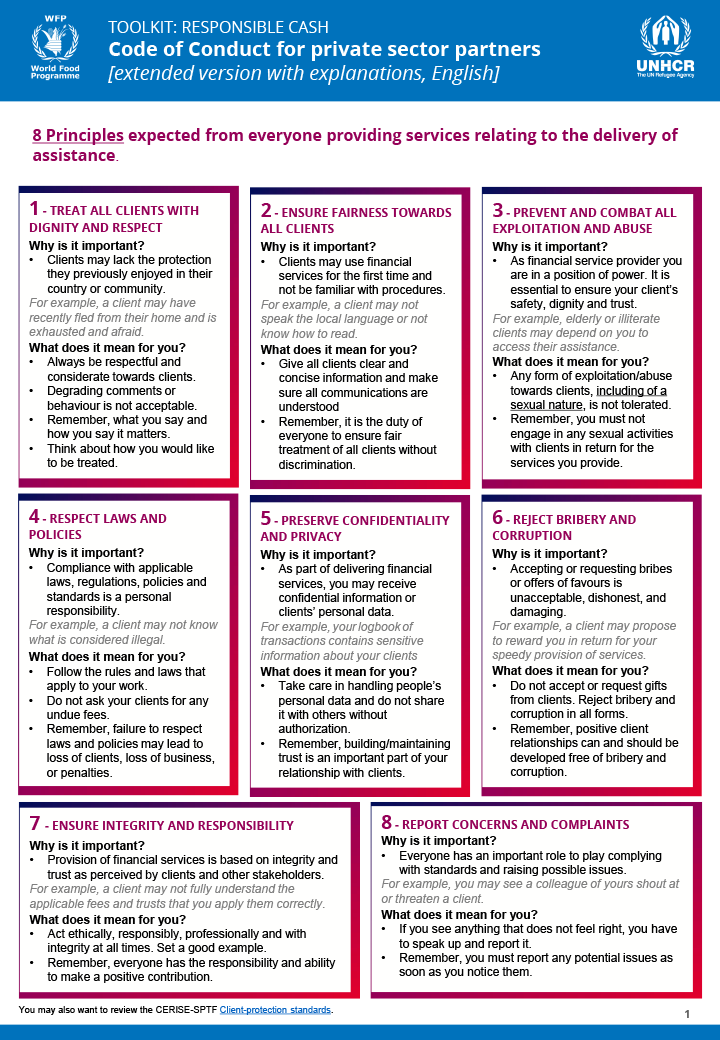
Code of Conduct for private sector partners
Establish ethical standards for private sector engagement in cash assistance. Following a Code of Conduct is essential for all entities working on cash transfer programmes, including private sector partners such as financial service providers. Use these resources to ensure your private sector partner staff and contractors fully understand the 8 core principles and requirements when […]
Customer Protection Training (adaptable PowerPoint Presentation)
Partner for stronger customer protection: run training sessions to equip service provider staff during onboarding. This is an adaptable PowerPoint Training to help humanitarian/development organizations onboard Financial Service Providers. It is designed around the 8 core Code of Conduct principles, aimed to strengthen customer protection, promote positive behavior, and ensure fair and respectful interactions with cash recipients. […]